
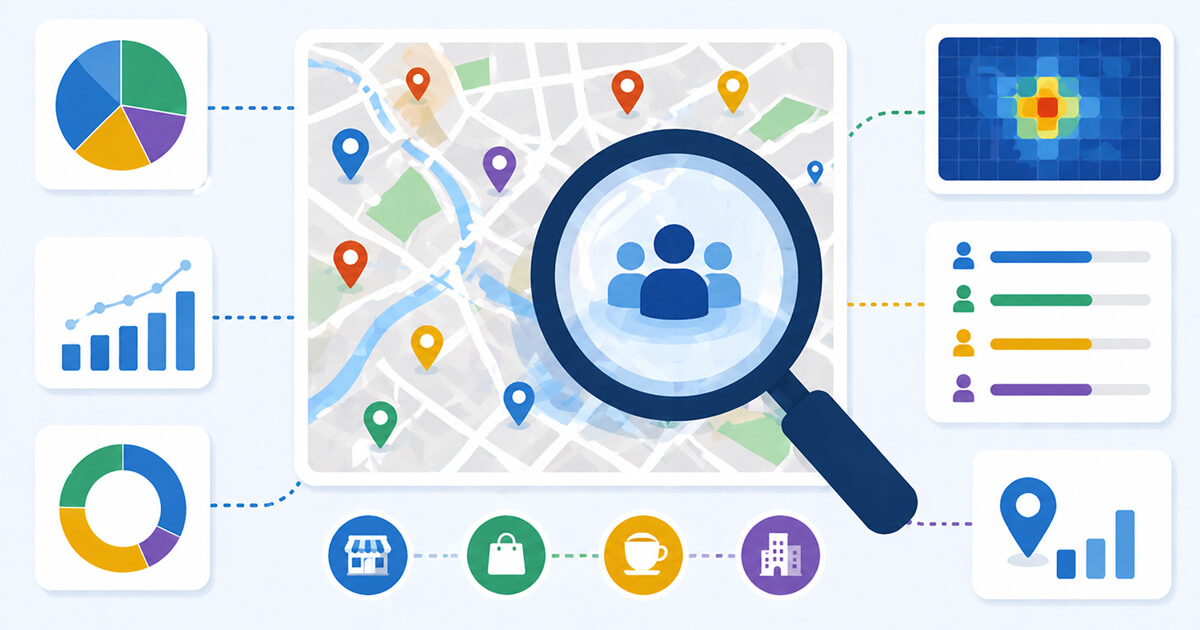
Where do your customers actually come from? How far are they willing to travel? Which neighborhoods generate the most visits? These questions are no longer answered by guesswork. Location intelligence—the analysis of geospatial data to reveal customer behavior patterns—has become a competitive necessity. Businesses that leverage location data make smarter decisions about marketing, staffing, and expansion.
What Location Intelligence Reveals That Basic Analytics Miss
Traditional web analytics tell you how many people visited your site. Location intelligence tells you where they live, where they work, what routes they take to reach you, and which competing businesses they pass along the way. This is powerful information. For example, a coffee shop might discover that 60% of its morning customers come from a single apartment complex 1.5 miles east, while only 10% come from the west side. That insight changes everything: target ads to that zip code, adjust opening hours to match their commute, and even consider a second location closer to that catchment area.
Mobility data (anonymized location signals from mobile devices) reveals daily travel patterns. Retailers can see that customers who visit them also frequently visit nearby grocery stores, gyms, or dry cleaners. This enables partnership opportunities (“Show your gym membership for 10% off”) and better site selection—if your ideal customers are already passing a certain intersection, that may be your next store location.
Turning Intelligence Into Action
Start with the data you already have. Google Business Profile Insights shows direction request origins—the approximate locations of people who asked for directions to your business. Export this data monthly to identify clusters. Point-of-sale (POS) data with zip code collection is even better; incentivize customers to provide their postal codes at checkout.
For advanced intelligence, consider foot traffic analytics platforms like Placer.ai or Safegraph. These tools use aggregated mobile data to show: trade area maps (your true customer footprint), cross-visitation patterns (where your customers go before and after you), and competitor encroachment (how many of your customers also visit rivals).
Apply the insights systematically. If 70% of your customers come from within 3 miles, reduce advertising spend beyond that radius. If a neighborhood shows high intent but low conversion, consider a pop-up event or local sponsorship. If morning traffic is heavy but afternoon is dead, adjust staffing and run lunch specials.
Remember: location intelligence is not static. Customer patterns shift with seasons, new housing developments, road closures, and competitor openings. Re-analyze every quarter to stay ahead.