
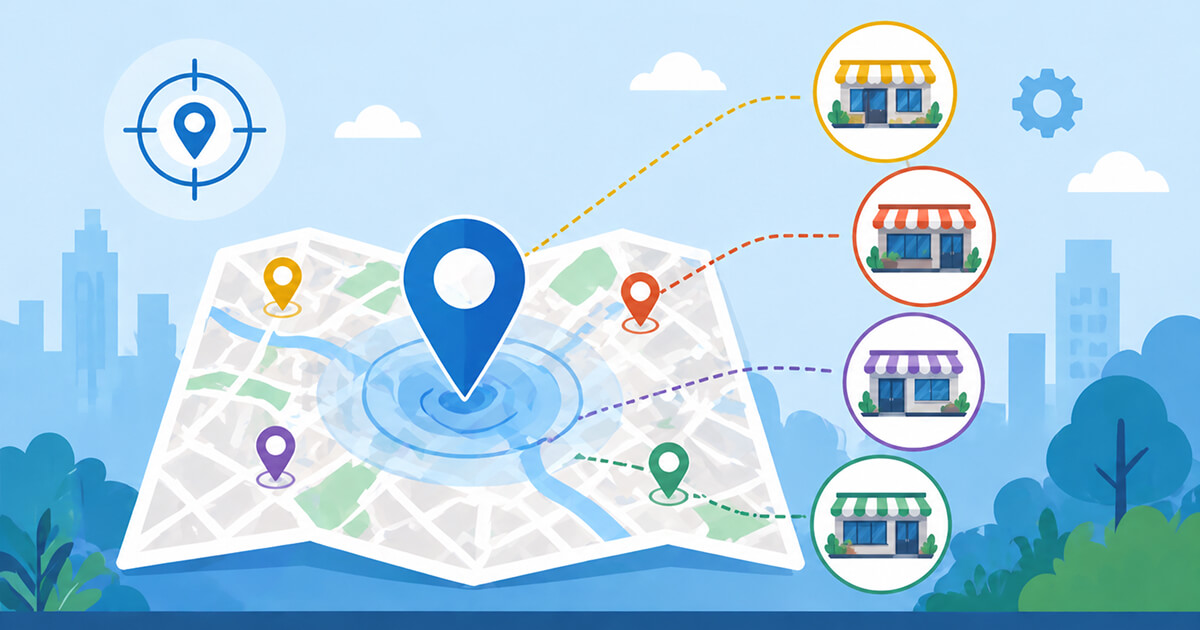
Managing a business with multiple locations creates unique opportunities and challenges. A single-location owner can focus on one address, one set of reviews, and one local market. But with ten, twenty, or a hundred locations, small errors multiply into major problems. Geographic targeting at scale requires a systematic approach that balances local relevance with brand consistency.
The Multi-Location Landscape in 2026
Consumer behavior has shifted toward hyperlocal decision-making. A customer in North Dallas isn’t interested in your downtown Fort Worth location—they want the branch five minutes from their home. Each location must stand on its own in local search results, competing against nearby independents and national chains. At the same time, your brand must remain recognizable and trustworthy across every market.
The challenge is twofold: (1) ensure each location ranks well for its specific geographic area, and (2) prevent internal cannibalization where one location’s optimized page outranks another within its own catchment zone. Businesses that master this dual goal see up to 40% higher cross-location revenue than those using a one-size-fits-all approach.
Proven Geographic Targeting Strategies
Start with a centralized location data management system. Manually updating 50 Google Business Profiles, 50 Apple Maps listings, and 50 website pages is impossible without error. Tools like Rio SEO, SOCi, or Uberall allow you to manage all locations from a single dashboard, ensuring NAP consistency across every platform.
Each physical location needs its own dedicated landing page on your website. The URL structure should be clear: example.com/locations/city-name or example.com/city/branch. Each page must include: unique local content (mention nearby landmarks, streets, or neighborhoods), location-specific testimonials, embedded Google Map showing the exact address, and unique meta tags (title, description) for that area.
Avoid duplicate content between location pages. Instead of copying the same “About Us” section on every page, write unique paragraphs about each area: “Our North Dallas team has served the Addison and Galleria corridor since 2015. We’re proud sponsors of the local Little League team…” This signals relevance to both search engines and customers.
Review management at scale is equally critical. Monitor reviews across all locations in one interface (via reputation management software). Respond to every review within 24 hours. For low-rated locations, implement site-specific training or operational fixes rather than applying a blanket policy.