
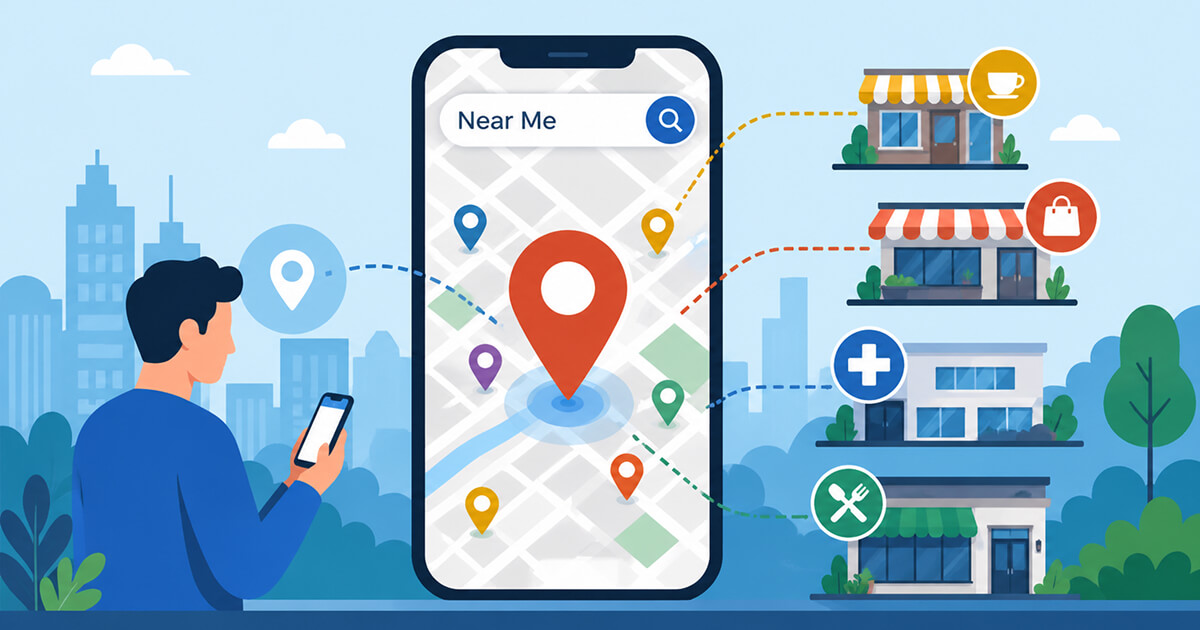
Over 70% of local searches now include “near me” or geographic modifiers like “close by” or “within 5 miles.” This isn’t a passing trend—it’s a fundamental shift in how consumers find and choose local businesses. When someone types “coffee near me” or “dentist near me,” they’re not casually browsing; they’re signaling high intent, urgency, and readiness to purchase. Understanding the psychology and mechanics behind these searches is the key to dominating local discovery in 2026.
Why “Near Me” Searches Matter More Than Ever
Mobile devices have rewired customer behavior. The average smartphone user checks their phone over 150 times per day, and many of those interactions involve solving immediate needs. “Near me” searches have grown by over 900% in the past two years, and the conversion data is staggering: 76% of people who conduct a local search on their phone visit a business within 24 hours, and 28% make a purchase. That means nearly one in three “near me” searches results in a transaction.
The psychology is simple: proximity equals convenience, and convenience equals value. When a customer searches “near me,” they’ve already decided to buy from someone nearby. Your job is to ensure that someone is you. Search engines prioritize businesses that are physically close, have accurate location data, and possess strong review signals. Google’s local algorithm weighs proximity, prominence, and relevance equally, meaning you need all three to win.
Actionable Strategies for 2026 Dominance
Start with your Google Business Profile (GBP). Complete every field: categories, attributes (outdoor seating, Wi-Fi, wheelchair access), hours, and services. Businesses that post weekly photos and updates receive 26% more impressions and 42% more direction requests. Respond to all reviews—both positive and negative—within 24 hours; this signals engagement and trust to both customers and algorithms.
Next, ensure NAP (Name, Address, Phone number) consistency across every platform: your website, social media, directories like Yelp and Yellow Pages, and mapping apps. Even a single discrepancy—like “Suite 200” vs. “Ste 200″—can confuse search engines and drop your rankings.
Finally, think beyond Google. Apple Maps, Waze, and Bing Places all contribute to “near me” visibility. Claim and optimize each one. With AI-driven search assistants now pulling data from multiple sources, every platform matters.